
10 Foods That Might Be Sabotaging Your Weight Loss

Updated: 5 days ago
There is nothing worse than thinking you're making better food choices, when it turns out you’re really not.
Ugh. All that hard work wasted!
When you set out to eat better, you may be tempted to start by cutting out all the foods you love, dropping your calories crazy low, and veering toward the cleverly marketed "health foods." And it can feel all consuming.
As a nutritionist and weight loss coach, I see it all the time. Clients come to me after making a few healthy changes wondering why they're not seeing results. They've cut out sugar, increased fruits and veggies, and stocked their pantry, fridge and freezer with all sorts of "healthy" foods. Many of them have even added in daily exercise. And while they feel like they've made great improvements, their energy is zapped, they struggle with brain fog and generally feel like crap.
Maybe you can relate. The truth the diet industry has made "healthy" hard. One day fruit is good for you, the next it's bad. Protein is good, but only certain kinds. And don't even get me started on Carbs
That's why I put together this quick list of ten foods that might be sabotaging your weight loss goal.
But hear me when I say this: I am a firm believer that ALL foods fit. If some of the foods on this list happen to be your favorites, then this is a lesson in awareness so you can practice healthier portion sizing.
The goal of this list is to bring awareness as to foods you might think are "healthy" and supporting your goals, when in fact they may be a fun dessert packaged as "healthy" and no better than the cookie, ice cream or candy bar you're trying to avoid.

Ten Foods That Might Be Sabotaging Your Weight Loss Goals:
1) Sushi
At first glance, sushi sounds like a light and healthy choice — fish, rice, and seaweed.
And when it’s made with high-quality ingredients and balanced portions, it absolutely can be.
The challenge is that many grocery store or takeout sushi rolls tend to be heavy on rice and light on protein and vegetables. Sushi rice is typically short-grain white rice seasoned with sugar and rice vinegar, which means many rolls end up being mostly refined carbohydrates.
When a roll is 60–75% rice and contains only a small amount of fish or vegetables, it can lead to a quick spike in blood sugar followed by hunger again not long after eating.
If sushi is one of your favorites, a few simple level ups can help make it more balanced:
Choose rolls that include protein and healthy fats such as salmon, tuna, or avocado
Look for options with more vegetables
Ask for brown rice if available for added fiber
Go easy on soy sauce to help reduce sodium
With a few small adjustments, sushi can still absolutely fit into a balanced eating pattern.

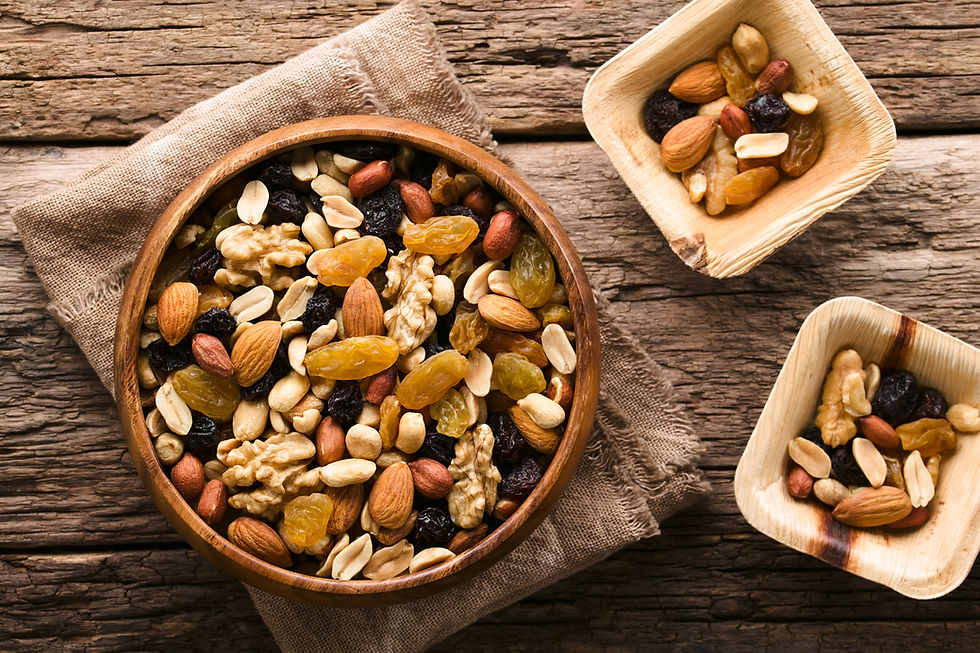
2) Trail Mix
Trail mix often gets labeled as the perfect “power snack” — and it certainly can be.
It’s portable, satisfying, and can provide a great combination of healthy fats, protein, and carbohydrates. The challenge is that many trail mixes are very calorie-dense, and portion sizes can add up quickly.
In fact, some mixes can contain close to 700 calories in just one cup, especially when they include sweetened dried fruit, chocolate, or candy pieces.
That doesn’t mean trail mix is off limits — it simply means portion awareness matters.
To make this snack work better for your goals, try:
sticking to a small handful portion
choosing mixes made mostly of unsalted nuts and seeds
selecting dried fruit with no added sugar
skipping mixes that include candy or chocolate as the main ingredient
Nuts are a fantastic source of healthy fats and protein — just remember that because they’re calorie-dense, a little goes a long way.
3) Spinach Wraps and Veggie Pastas
We’ve been conditioned to think that if something is green, it must automatically be healthier.
Spinach wraps and vegetable pastas are great examples of this “health halo.” While the packaging may highlight vegetables, many of these products are still primarily made from refined flour with only a small amount of vegetable powder added for color.
In fact, when you look at the ingredient list, spinach or vegetables are often listed far down the label — meaning they make up only a tiny portion of the product.
That doesn’t mean you can’t enjoy wraps or pasta. The key is simply choosing versions that offer more nutritional value.
A few simple upgrades might include:
choosing whole grain wraps instead of refined flour wraps
looking for pastas made from whole grains, chickpeas, or lentils
adding real vegetables to your meal for extra fiber and nutrients
The takeaway: it’s not just about the color of the food — it’s about the ingredients that make it.

4) Protein Bars
Have you ever reached for a protein bar instead of chips or cookies and felt like you were making the healthier choice?
Protein bars can seem like a convenient solution when you’re short on time. But many bars on the market are surprisingly high in calories, added sugars, sugar alcohols, and processed ingredients.
While they may contain a decent amount of protein, they often don’t provide the same level of satisfaction as a balanced meal made with real food. That’s why many people find themselves hungry again shortly after eating one.
That said, not all protein bars are created equal. When choosing one, it helps to scan the nutrition label and ingredient list.
Look for options that:
provide a good amount of protein
contain minimal added sugars
have recognizable ingredients
offer a balance of protein, carbohydrates, and healthy fats
And remember, a protein bar is best used as an occasional bridge between meals, not as a regular meal replacement.
If you enjoy protein bars, making them at home can also be a great option. Homemade versions often contain fewer processed ingredients while still providing a satisfying balance of nutrients.

5) Cous Cous
Couscous often sounds like a hearty whole grain, but it’s actually a type of small pasta made from semolina flour.
Because traditional couscous is made from refined wheat, it tends to be lower in fiber and protein than many other grain options. That doesn’t mean it’s off limits, but it may not keep you feeling as full and satisfied as longer-lasting complex grains.
If you enjoy couscous, consider balancing it with protein and vegetables to create a more satisfying meal.
You can also experiment with grains that offer more fiber and nutrients, such as:
quinoa
bulgur
farro
cracked wheat
These options tend to provide more fiber and protein, which can help support fullness and balanced energy levels.

6) Commercial Granolas
The word “granola” often brings to mind images of wholesome breakfasts and healthy outdoor lifestyles.
But many store-bought granolas can be surprisingly high in added sugars, oils, and calories, while offering relatively modest amounts of protein and fiber.
Because granola is typically made with oats, oils, sweeteners, and sometimes nuts or dried fruit, the calorie density can add up quickly. In some cases, a single cup can contain 500–600 calories, which is more than many people realize.
That doesn’t mean you have to give up granola entirely.
If you enjoy it — especially as a topping for Greek yogurt — try:
choosing varieties lower in added sugar
watching portion sizes
using granola as a topping rather than the base of your meal
Even one tablespoon sprinkled over Greek yogurt can provide the crunchy flavor you enjoy while keeping the portion balanced.
And if you like to cook, homemade granola can be a great option. Using whole oats, nuts, naturally dried fruit, and spices like cinnamon or nutmeg allows you to control the ingredients while still creating a delicious breakfast addition.

7) Commercial Salad Dressings
Salads are often seen as the go-to “healthy” meal — and they absolutely can be when they include vegetables, protein, and balanced ingredients.
But the dressing poured on top can sometimes add more calories, sugar, and sodium than people realize.
Many commercial salad dressings contain added sugars, refined oils, salt, and other processed ingredients designed to enhance flavor. And because dressings are easy to pour generously, those calories can add up quickly.
That doesn’t mean you have to skip dressing altogether.
A few simple level ups include:
checking nutrition labels for lower added sugar and sodium
choosing dressings made with simpler ingredients
measuring portions instead of free-pouring
There are also many newer options on store shelves made with more natural ingredients, including some yogurt-based dressings that provide a little extra protein.
And at the end of the day, if your favorite dressing helps you enjoy and eat more vegetables, that’s a win. Just keep portion sizes in mind — two tablespoons is typically the standard serving size.

8) Sports Drinks
Sports drinks are often marketed as the go-to choice for hydration and electrolytes, especially during exercise.
The reality is that many sports drinks contain significant amounts of added sugar, along with sodium, artificial colors, and flavorings. For the average person doing light to moderate activity, these extra ingredients are often unnecessary.
In fact, many sports drinks contain as much sugar as a traditional soda, which can add calories without providing much nutritional benefit.
Even some sugar-free versions rely on artificial sweeteners, which may encourage a preference for sweeter flavors throughout the day.
For most people, water is still the best option for staying hydrated.
If you enjoy a little flavor, try adding fresh ingredients like lemon, orange, cucumber, or mint to your water. These can make hydration more enjoyable without the added sugars.
For longer workouts or intense exercise sessions, beverages like coconut water or electrolyte mixes with minimal added sugar can be helpful for replenishing fluids and electrolytes.

9) Flavored Yogurts
Yogurt is often seen as a healthy snack — and it certainly can be. The challenge is that many fruit-flavored yogurts contain a surprising amount of added sugar.
In some cases, an 8-ounce serving can contain 40 grams of sugar or more, much of which comes from added sweeteners rather than whole fruit.
That doesn’t mean yogurt needs to be off the menu. It simply means choosing the right type can make a big difference.
A few simple level ups include:
choosing plain Greek yogurt, which is typically higher in protein and lower in added sugar
adding fresh fruit, nuts, or seeds for flavor and texture
selecting yogurt brands that offer lower-sugar varieties
These small adjustments allow you to enjoy yogurt as a satisfying snack while keeping the overall balance of your meal or snack in check.

10) Fat Free Products
When you’re trying to lose weight, products labeled “fat-free” can sound very appealing — a message many of us heard repeatedly during the low-fat diet era of the 1980s and 90s.
The challenge is that when food manufacturers remove fat from a product, they often replace it with other ingredients to maintain flavor and texture. In many cases, that means added sugars, extra sodium, or additional processing.
Fat also plays an important role in helping foods feel satisfying and in supporting nutrient absorption. Completely removing it from foods doesn’t necessarily make them more balanced.
That’s why many nutrition experts now focus less on “fat-free” and more on overall ingredient quality and balance.
A helpful approach is to:
check ingredient lists for added sugars and excess sodium
choose foods made with simple, recognizable ingredients
include healthy fats such as olive oil, nuts, seeds, and avocados
be mindful of portion sizes
And remember, fat loss rarely comes down to a single food choice.
One thing I often see with clients is that fat loss stalls aren’t usually caused by one food — they’re often the result of small habits that quietly add up over time.

Final Thoughts
The goal of this list isn’t to tell you that you can never eat these foods again.
Many of them can absolutely fit into a balanced way of eating.
What matters most is awareness.
When you start paying attention to ingredient lists, portion sizes, and how foods are balanced with protein, fiber, and healthy fats, it becomes much easier to make small upgrades that support your goals.
And those small upgrades — practiced consistently — are what lead to lasting progress.
You don’t need a perfect diet. Just a few smarter choices made more often.

Looking for More Simple Tips & Inspiration?
Healthier living doesn't have to mean spending hours planning meals or crushing every workout.
For more practical meal and fitness ideas, protein-packed recipes, and simple midlife tips for busy days, explore the Mind + Body Elite Blog.


